Sheffield cutlery makers serving London and the world for over 100 years0114 272 4969

Pattern-led replacement work

Matching a silver cutlery pattern

Pattern is the visual language of a cutlery service. A small difference in border, shoulder or terminal can make an otherwise good replacement look unrelated. Our Sheffield makers examine the whole piece, not simply the most obvious ornament, before proposing a match.

Close view of an ornate silver cutlery pattern being comparedMade at 33 Snow Lane, Sheffield

Good to knowYou do not need to know the pattern name before contacting us. Clear photographs of the surviving pieces are enough to begin.

Maker-led replacement work

How we approach your commission

Every project starts with the surviving object and the reason for replacing it. That keeps the work accurate, proportionate and useful.

What makes a pattern identifiable

Recognisable details may include shell, bead, thread, reed, scroll or pistol forms. Less obvious features are equally useful: the heel, the end of decoration near the bowl or blade, the thickness of an edge and the proportions of the handle.

Marks can establish maker, place, date and standard, but an unclear mark does not end the enquiry. Construction, wear and comparison across several pieces can provide a practical route forward.
Exact, sympathetic or complementary

Some clients need the closest practical reproduction of an existing knife. Others prefer a sympathetic design that respects the service without pretending to be an original antique piece.

We explain what the available evidence supports. The solution may involve existing tooling, adapted tooling, hand finishing or a complementary design where an exact historic repeat would be disproportionate.

From identification to a finished knife

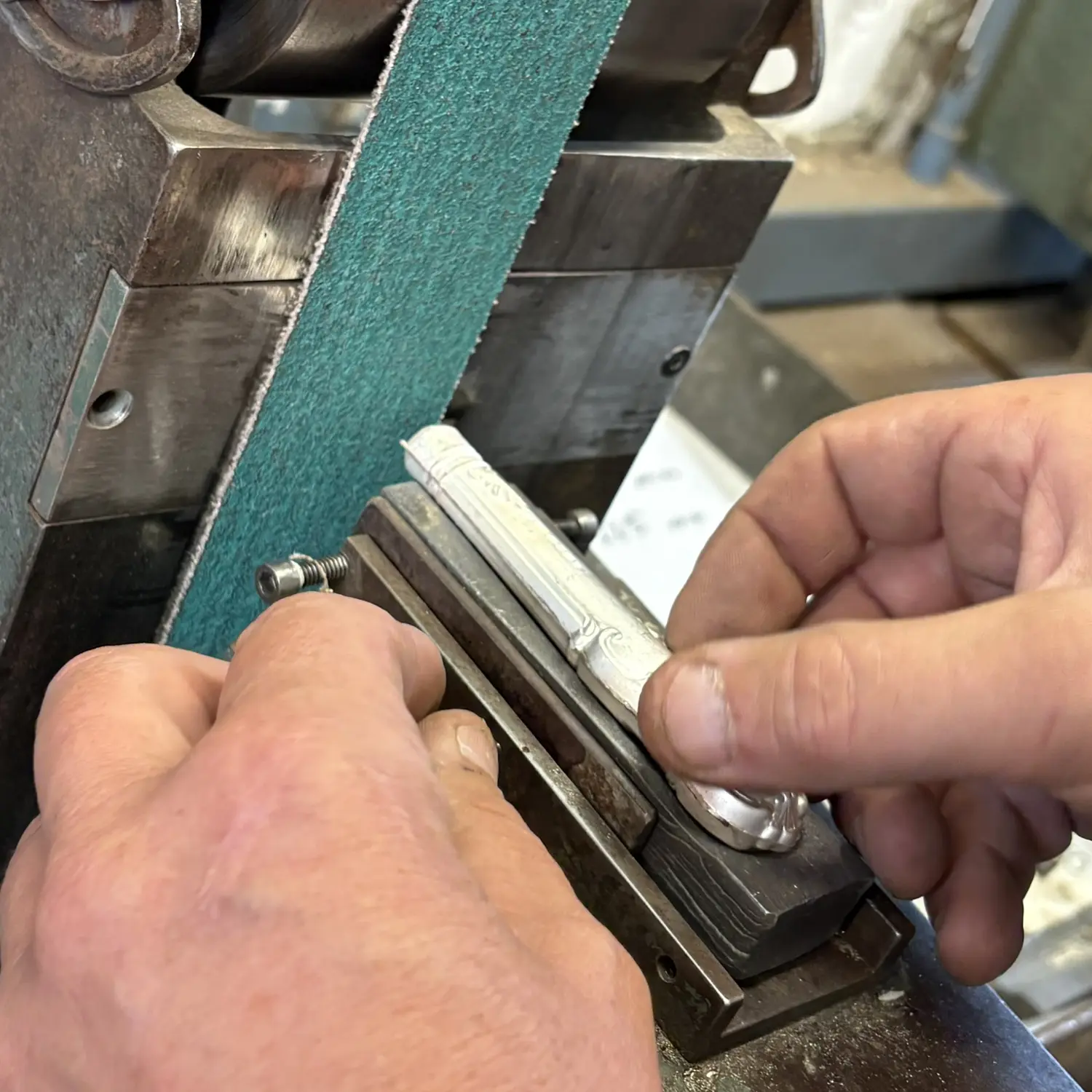
Once pattern and dimensions are agreed, the replacement is developed around a physical reference and an approved specification. Key stages can include forming, fitting, grinding, polishing and final comparison with the original.

The result is made at Snow Lane by people who understand how Sheffield cutlery should look, balance and perform.

First assessment

What to send us

These details help us understand the pattern before any valuable original is transported.

  1. 01Front and reverse photographs on a plain background
  2. 02Close views of terminals, shoulders, borders and marks
  3. 03A ruler included in at least one image for scale
  4. 04Several pieces where decoration varies across the service
Replacement silver knife being made in the Beatson Sheffield factory

From reference to replacement

Made by us in Sheffield

01

Identify

We review pattern, marks, construction and missing piece.

02

Specify

Dimensions, material, blade, quantity and finish are agreed.

03

Make

The replacements are formed, fitted and finished at our factory.

04

Compare

Finished work is checked against the approved reference.

Common questions

About matching silver cutlery patterns

Can you identify a pattern from a photograph?

Frequently we can narrow it down from good photographs. A physical piece may still be required before manufacture.

What if the pattern has no name?

A commercial name is useful but not essential. We can work from the physical geometry and decoration of the original.

Can a monogram be included?

Send a square-on close photograph. We can then assess how it might be reproduced or incorporated.

Start with photographs

Could your silver service be complete again?

Email photographs or arrange a visit to our Snow Lane factory. We will explain what can be matched, made or restored.

Request an assessmentCall 0114 272 4969